Collection Filing Service
Nationally Authorized Certification · Registered in National Database · Access to Premium Distribution Channels
National Certificate
Traceability Certificate
Officially registered with the state-owned enterprise authority
Zhejiang Province's Sole Operating Center
Leverage the authority of a central state-owned enterprise platform to comprehensively solve all challenges in collectibles circulation, provenance tracking, auction failures, and value depreciation—empowering your assets to appreciate!
Four Core Services
Nationally Authorized Authentication and Filing
Backed by a nationally recognized authoritative appraisal institution, we conduct comprehensive scientific testing and expert evaluation of your collection to issue legally binding authentication and registration certificates.
Enter into the national database
Complete entry of collection data into the national-level art database to enable permanent archiving and traceable retrieval.
Break the cycle of failed auctions
Achieve authoritative filing certification to significantly enhance market credibility and liquidity value of collections, while substantially reducing the risk of auction failure.
Establish nationwide premium distribution channels
Connect with top-tier auction houses, museums, and private collectors nationwide to establish an exclusive fast-track channel for registered collections.
Display of Authoritative Certificates
Authentic certificate, scan to verify, NFC mobile read
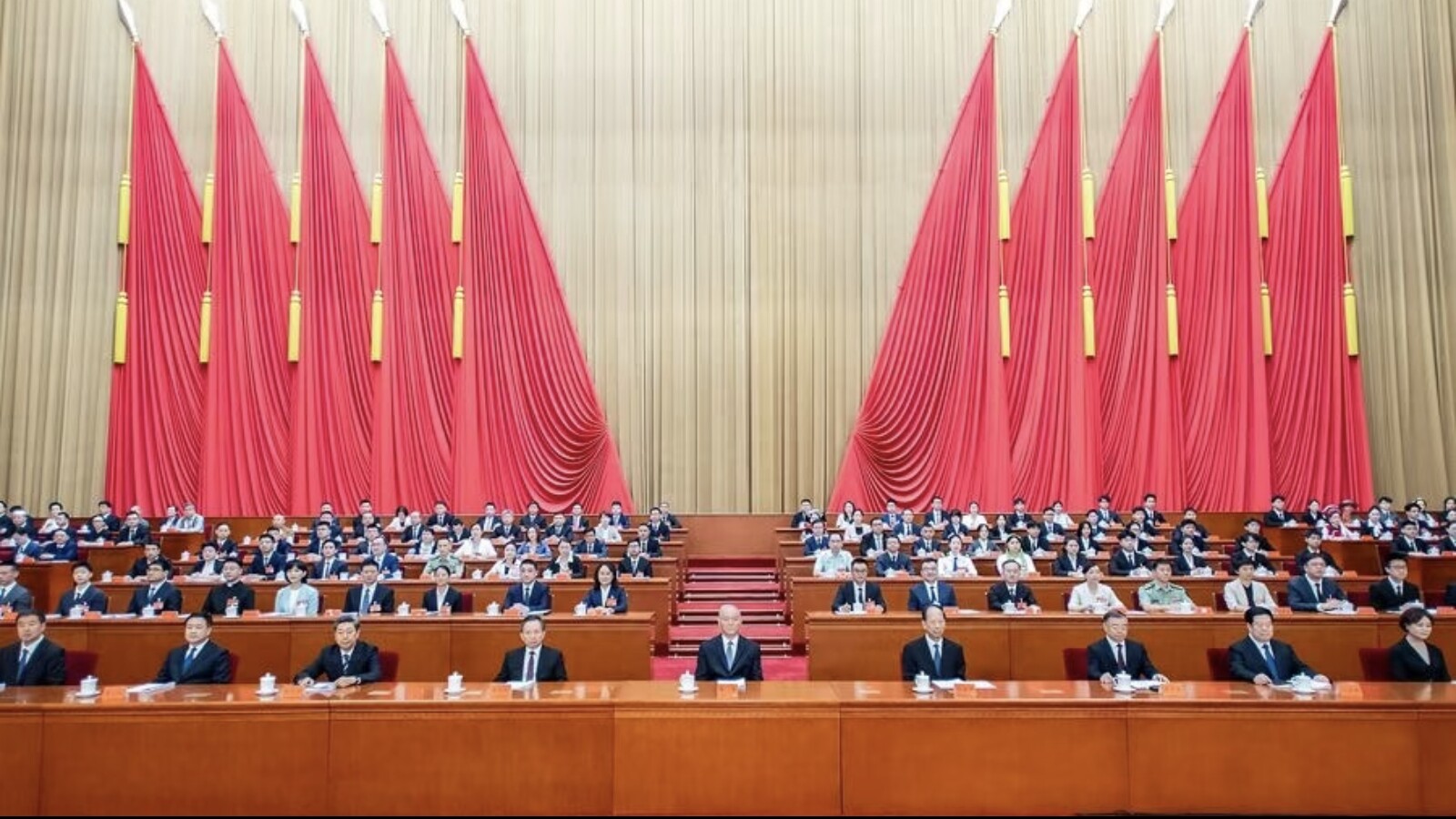
The ongoing sessions of the National People's Congress and the Chinese People's Political Consultative Conference (the "Two Sessions") are driving significant policy shifts and reforms that will profoundly impact China's art collecting market. These sessions have not only injected fresh vitality into the sector but also charted a clear path forward for collectors and investors alike. During the Two Sessions, delegates and committee members engaged in in-depth discussions on future trends and emerging opportunities in the collecting market. Multiple experts highlighted that with progressively relaxed national policies and a maturing marketplace, the industry is poised to seize unprecedented growth prospects—especially in 2026, as a wave of favorable policies takes effect, ushering in a more vibrant and prosperous era for art collecting. Art market topics drew widespread attention at the Two Sessions. The most notable development was the formal implementation of the *Regulations on the Circulation of Cultural Relics and Artworks*. This landmark regulation has fundamentally reshaped the rules governing China’s collecting market, offering a historic opportunity for private collectors. The government has explicitly committed to strengthening support for the art market and accelerating the thriving development of the art industry. Concrete measures include optimizing tax policies, enhancing market oversight, and refining systems for art authentication and valuation—all aimed at fostering a fairer, more transparent, and healthier ecosystem for art collecting. On taxation, authorities plan to introduce additional incentives for art transactions. For instance, certain precious artworks with historical significance may qualify for VAT exemptions or reductions, lowering transaction costs for mid- and small-scale collectors while stimulating market activity. These measures are expected to attract more collectors and investors, further fueling market growth. Together, the legalization of circulation pathways, targeted tax relief, and upgraded authentication frameworks have significantly energized the collecting market. Beyond expanding choices and safeguards for existing collectors, these policies will undoubtedly draw new participants and drive sustained prosperity across the sector.
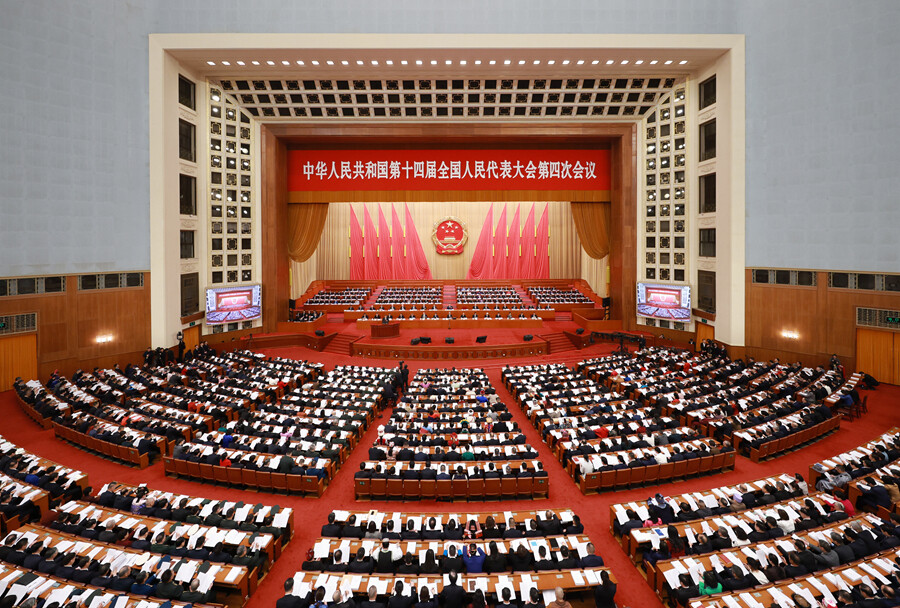
National policies, including the "14th Five-Year Plan for Cultural Industry Development," the "Opinions on Promoting High-Quality Development of Digital Cultural Industries," and the "Opinions on Advancing the National Cultural Digitalization Strategy," have elevated the integration of digital technology and culture to a national strategic priority. These initiatives aim not only to diversify cultural industry formats and enrich citizens' lifestyles but also to emphasize the critical role of technological innovation in enhancing conversion capabilities and driving comprehensive socio-economic progress. The rapid advancement and widespread application of cutting-edge digital technologies—such as big data, blockchain, 5G, and cloud computing—alongside artificial intelligence (AI), have effectively stimulated new quality productive forces, significantly accelerated social-cultural advancement and economic transformation, and provided artists with entirely new tools and expansive creative horizons. **Key Challenges:** Digital art represents the artistic language of the new era. While China's technical capabilities in digital art align with international standards, significant gaps remain compared to global leaders in key AI subfields—including technological innovation, specialized talent development, evaluation standards for digital art, academic theory, market maturity, and public awareness. Addressing these challenges requires multi-dimensional strategies involving policy support, technological breakthroughs, educational reform, and market guidance to build a healthy, orderly ecosystem that fosters the flourishing growth of digital art. **Recommended Measures:** 1. **Research Breakthroughs & Talent Development:** Establish interdisciplinary laboratories and schools integrating science, digital technology, AI, and arts within higher education institutions. Additionally, form a dedicated committee under the China Association for Science and Technology focused on advancing science-art fusion. This will consolidate resources, amplify collective impact, secure China’s leadership and innovation capacity in global digital art, and deepen the synergy between culture and technology. 2. **Aesthetic Education普及 & Educational Integration:** The rapid evolution of digital art has democratized artistic creation while introducing new demands for aesthetic education. China's Generation Z (digital natives who grew up with the internet) exceeds 3 billion people; they possess an innate affinity for emerging technologies and digital culture. As both primary creators and future consumers of digital art, their needs must be met through diverse content offerings and the systematic integration of digital arts education into curricula to cultivate their appreciation and creative skills. 3. **Modernizing Art Evaluation Systems:** Digital art operates on fundamentally different principles than traditional forms like ink painting, oil painting, or installation art—which rely on physical materials and can be viewed as art worlds built upon decimal code 10. In contrast, digital art thrives within virtual environments rooted in binary code 01. As the paradigm shifts from physical to virtual, a fundamental overhaul of art evaluation systems is essential to establish standards and frameworks tailored to digital art's unique characteristics. 4. **Developing Next-Generation Digital Cultural Products:** Transform virtual digital art into tangible, innovative cultural products, bridging the gap between virtual creativity and real-world applications. This approach brings art closer to daily life, enhances public aesthetics and quality of living, and expands cultural consumption. By organizing expos and exhibitions, we can strengthen public engagement with digital art, positioning it as a catalyst for social innovation and economic growth while highlighting its unique value in the cultural industry. 5. **Refining the Art Market Ecosystem:** Leverage frontier technologies like blockchain to create a standardized, transparent marketplace for digital art. Blockchain ensures authenticity and immutability of transactions, boosting market trust and liquidity. It also enables a comprehensive ecosystem covering valuation, authentication, trading, and copyright management. Smart contracts further automate copyright administration and revenue distribution, safeguarding the rights of both creators and investors. 6. **Establishing Security & Ethical Frameworks:** To ensure safety and fairness in digital art, we must develop a robust security and ethical framework combining technological and legal safeguards. Technologically, deploy firewalls and protective measures to shield artworks from infringement. Legally, enact clear copyright regulations to empower artists and foster a culture of respect for intellectual property. Crucially, implement mechanisms to prevent AI-generated fraud, ensuring the responsible and sustainable development of this transformative field.

This image shows a complete set of 180 collection filing certificates, captured in real time after a seasoned collector completed the entry process. It clearly demonstrates the high recognition that industry veterans have for this national-level art artifact filing platform. All certificates feature premium gold-stamped leather covers with the platform's exclusive official "Art" (藝) anti-counterfeiting emblem. These are standardized filing credentials exclusively for the Ministry of Culture and Tourism's central enterprise project. Many collecting families and industrial collectors hold large volumes of artifacts and often complete their filing and entry in batches, similar to how Teacher Zhao from Wenzhou filed over 200 pieces in stages. Mass filing has become the standard practice among seasoned collectors: registering artifacts in the national unified digital art resource library with dual anti-counterfeiting verification channels via QR codes and NFC. Whether for preserving family heirlooms or preparing items for auction at domestic and international houses, official filing records significantly enhance an artifact's credibility. This is the preferred choice for high-end collectors seeking to organize their collections and safeguard their circulation value.
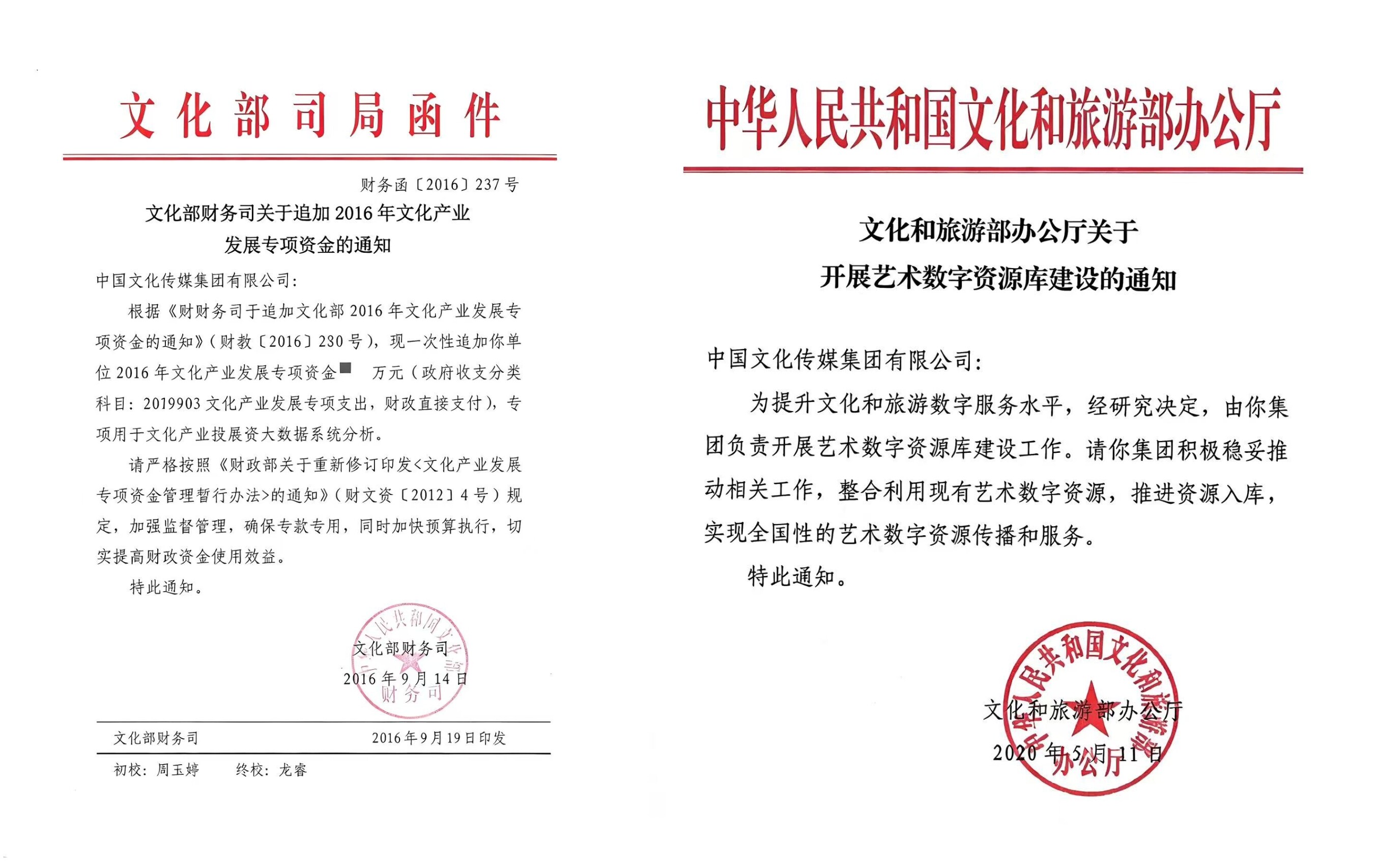
This document serves as a higher-level coordinating guideline, officially issued by the General Office of the Ministry of Culture and Tourism with its official seal in 2020. 1. Core Directive: The Ministry of Culture and Tourism has designated China Cultural Media Group as the sole entity responsible for building and operating the national art digital resource library. This includes centralizing the collection, archiving, and online dissemination services for all national art artifacts. 2. Hierarchical Advantage: While the first two documents pertain to fiscal funding allocations, this one is an authorization document at the top level of operational business. It formally establishes the exclusive official status of the group in managing national art artifact digital archives from an administrative perspective. 3. Practical Value: It explicitly confirms that our collection filing database is an integral part of the unified national official art digital resource library. Artifacts entered into the archive become part of the national art digital resource system, enabling nationwide auction houses and legitimate收藏 institutions to verify and access records uniformly. These archives carry nationally recognized public trust and authority.
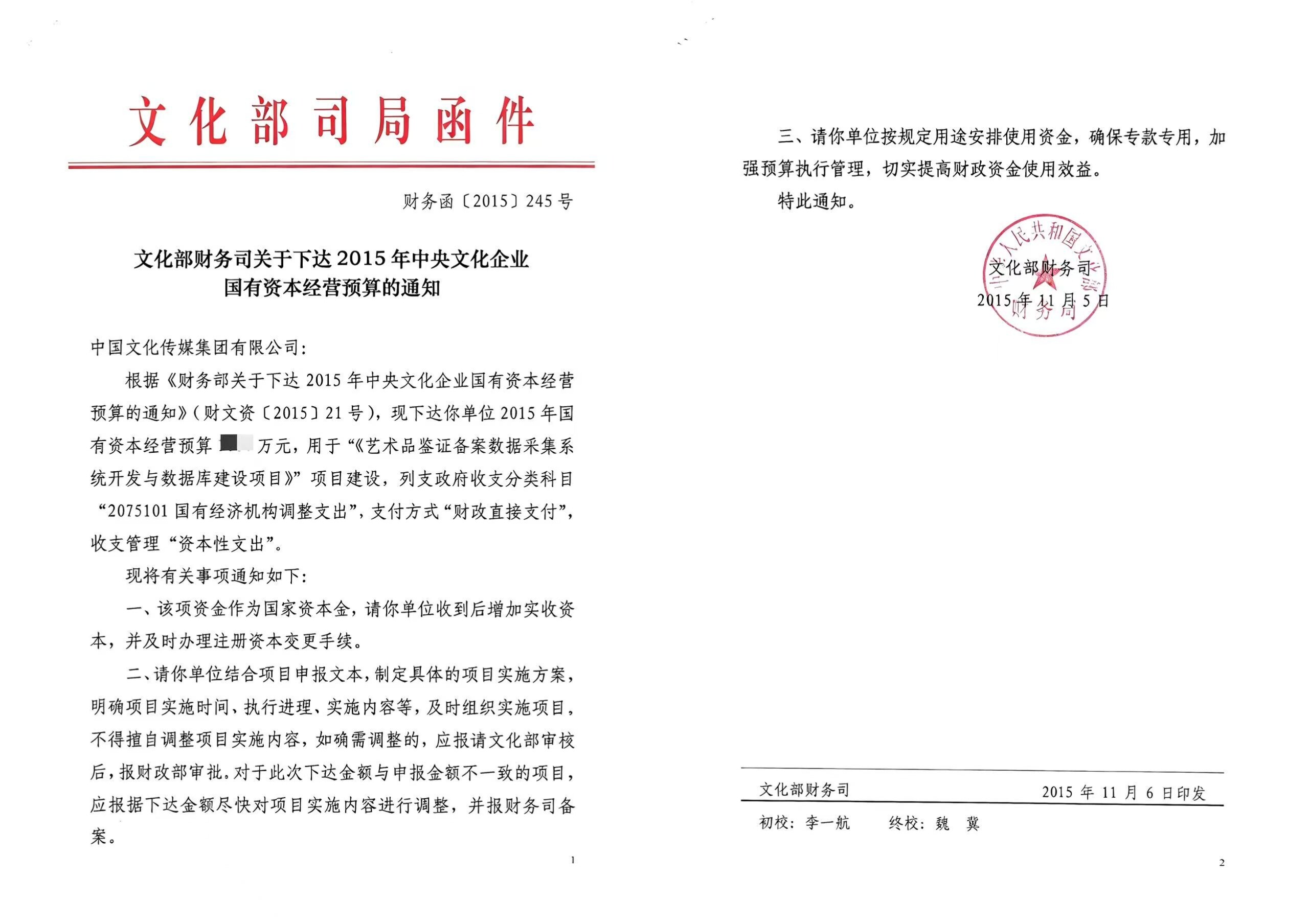
Document 1: Finance Letter [Year 2015] No. 245 — Notice on the State-owned Capital Operating Budget for Year 2015 This is the foundational red-header document issued by the former Ministry of Culture's Finance Department to China Cultural Media Group. 1. Purpose: The state allocated specific budget funds for the "Development and Database Construction Project for Art Authentication and Registration Data Collection," which serves as the origin of our current art registration and traceability platform. 2. Authority: This notice confirms that these funds constitute state capital, recorded under official government fiscal accounts. Directly allocated by the Ministry of Finance, these funds are designated for specific purposes only. All construction phases require dual approval from both the Ministry of Culture and the Ministry of Finance. 3. Significance: This directly proves that the art authentication and registration database is not a commercial project initiated by the enterprise alone, but a key state-funded cultural project launched in 2015 with full official oversight. It serves as the fundamental policy basis for the entire registration system. Document 2: Finance Letter [Year 2016] No. 237 — Notice on Additional Funding for Cultural Industry Development This supplementary notice, also issued by the Finance Department of the Ministry of Culture, provides additional support funding for the year 2016. 1. Key Content: The state has allocated additional special funds for cultural industry development specifically for upgrading the art big data analysis system, enhancing storage capacity, market analysis, and online exhibition features within the collection database. 2. Function: This document demonstrates the state's continuous multi-year investment in iterating and optimizing the art registration system, confirming it is a long-term initiative rather than a one-off project. Furthermore, it strictly enforces fund supervision to ensure the compliance and stability of the database system. 3. Collector Perspective: This indicates that the collection archive system has undergone years of continuous iteration and refinement, featuring a complete and standardized data framework. It guarantees long-term viability, alleviating concerns about data expiration or platform shutdown.
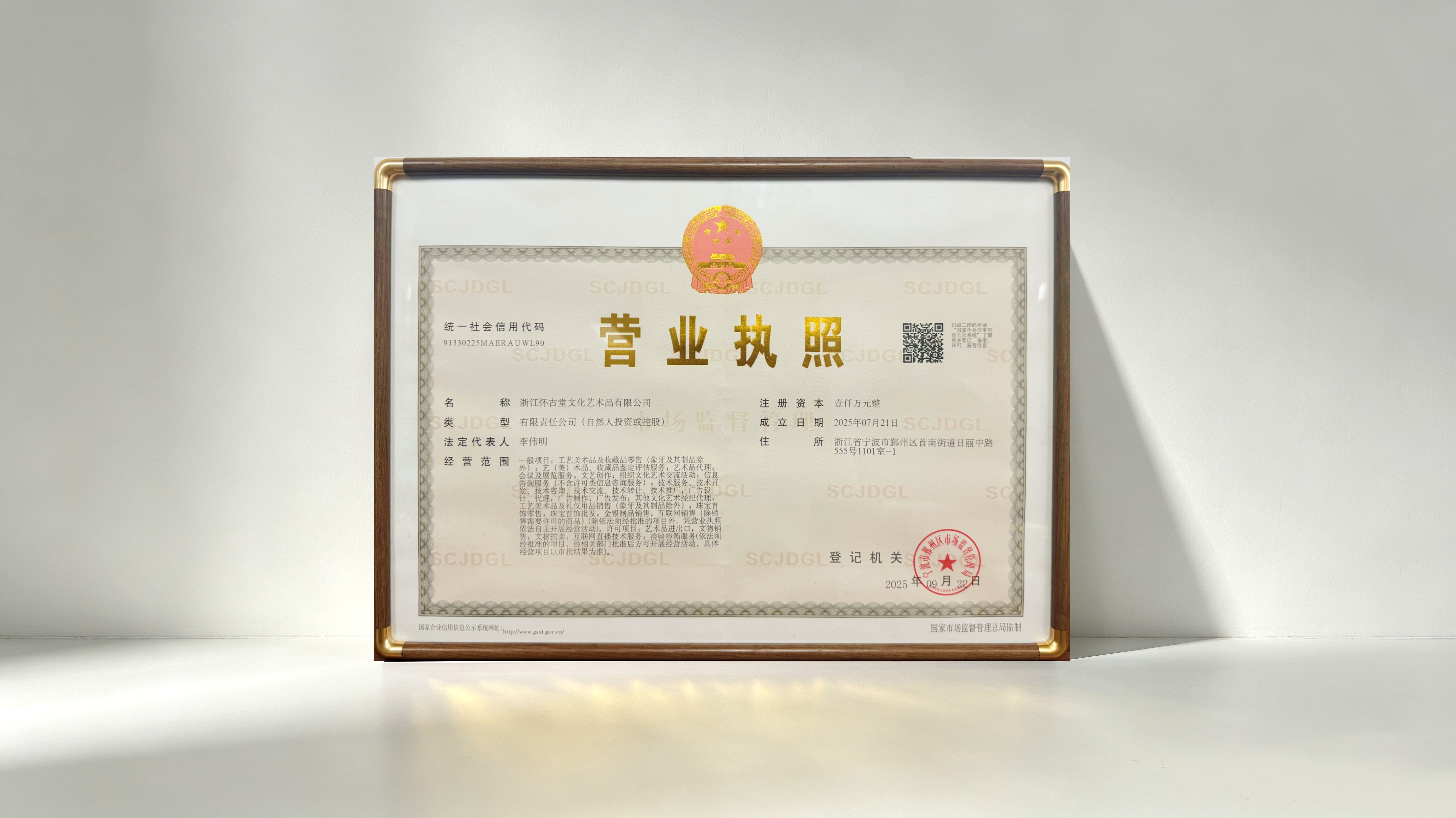
This license is the official business registration certificate of Zhejiang Huaigutang Cultural Art Products Co., Ltd., registered in Yinzhou District, Ningbo City. It was formally established in 2025 year, 7 month with a registered capital of 10 million RMB. The business scope fully covers end-to-end collection support services including art authentication and filing, exhibition curation, consignment agency services, digital archiving of artworks, and online display and trading of collections. The company holds complete legal qualifications to conduct compliant collection filing and coordinate acquisition services with major auction houses. Issued by the Market Supervision Administration of Yinzhou District, Ningbo City, this certificate allows verification of all enterprise information via the National Enterprise Credit Information Publicity System. As an officially designated provincial-level operating center, we ensure full compliance with business licensing requirements for all collection filing and consignment activities, guaranteeing a secure and legally sound partnership for every collector.
Company Registration and Qualifications Display
Official Sole Registration of a Central State-Owned Enterprise · Zhejiang Province's Only Operating Center | Display of Authoritative Qualifications
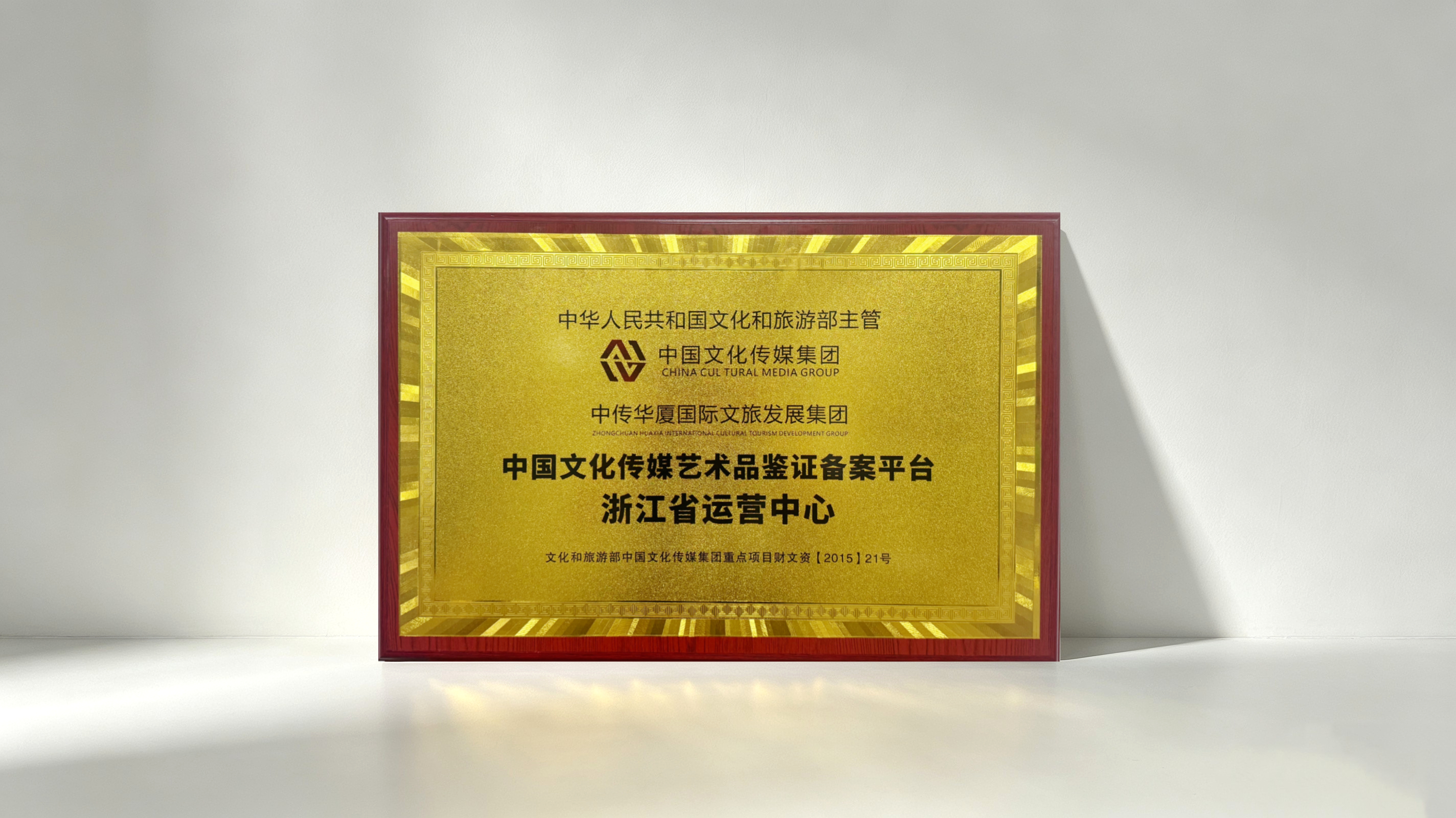
This is our core authorization license, the only operational entity licensed to implement this Ministry of Culture and Tourism flagship official project in Zhejiang. The project is a key state-owned initiative under the supervision of the Ministry of Culture and Tourism and China Cultural Media Group (Cai Wen Zi [Year 2015] Document No. 21), explicitly granting Zhejiang Huai Gu Tang Art Co., Ltd. official authority for art authentication and collection registration across the entire province. This license confirms our full provincial service qualifications. All collection records are directly integrated into the national-level art database. We are the officially compliant institution authorized to establish collection archives within the province and connect to nationwide auction and circulation channels. We also serve as the official service center for collectors to verify collections in person and process collection entry procedures.

This document certifies the qualification of the parent central state-owned enterprise, establishing the authoritative state-backed origin for the entire art authentication and registration project. China Cultural Media Group is a central cultural enterprise directly under the Ministry of Culture and Tourism. Its wholly-owned subsidiary, Zhongchuan Huaxia, manages nationwide art database collection, develops the authentication system, and sets registration standards. This plaque demonstrates that the entire collection registration framework is not independently built by private entities. It is supported by the full technical and policy resources of a national-level cultural SOE. All registration processes and data standards strictly adhere to official national regulations, clearly distinguishing this service from unverified private appraisal agencies lacking official backing.
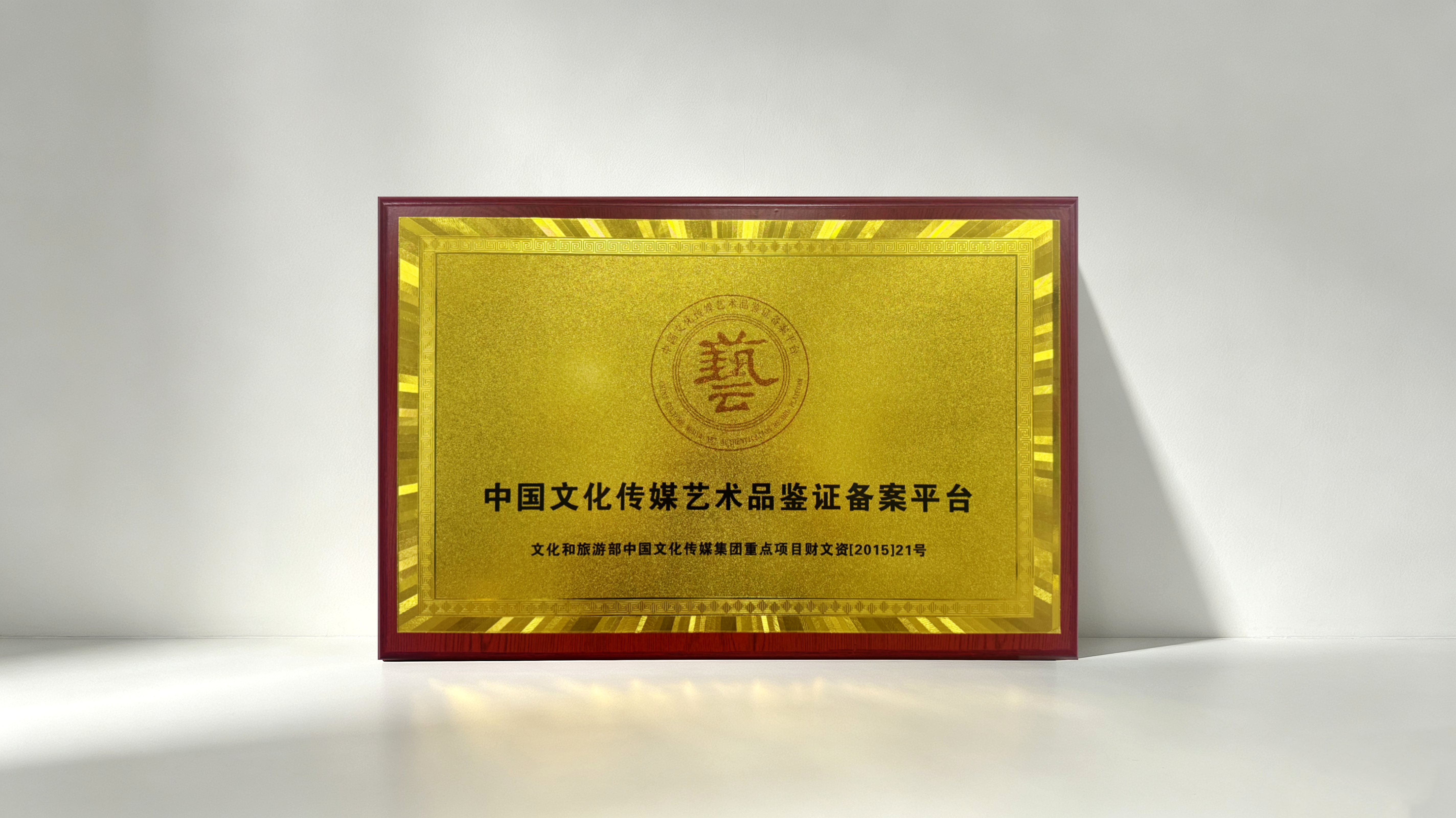
This plaque is a special certification for the National Artwork Database Project, displaying the official project approval number Cai Wen Zi [ 2015 ] No. 21. It features the platform's exclusive official "Yi" character anti-counterfeiting logo. It corresponds to the national-level art authentication and registration big data system, encompassing patented authentication equipment, an official online database, and end-to-end research results for artifact provenance verification. This serves as the core credential for online exhibition of collections, global auction house inquiries, and verification by high-end collectors. All collection records that have been entered into the system are fully recorded in this national-level platform, providing officially verifiable, standardized archival documentation to support collection circulation, consignment for auction, and inheritance of artifacts.
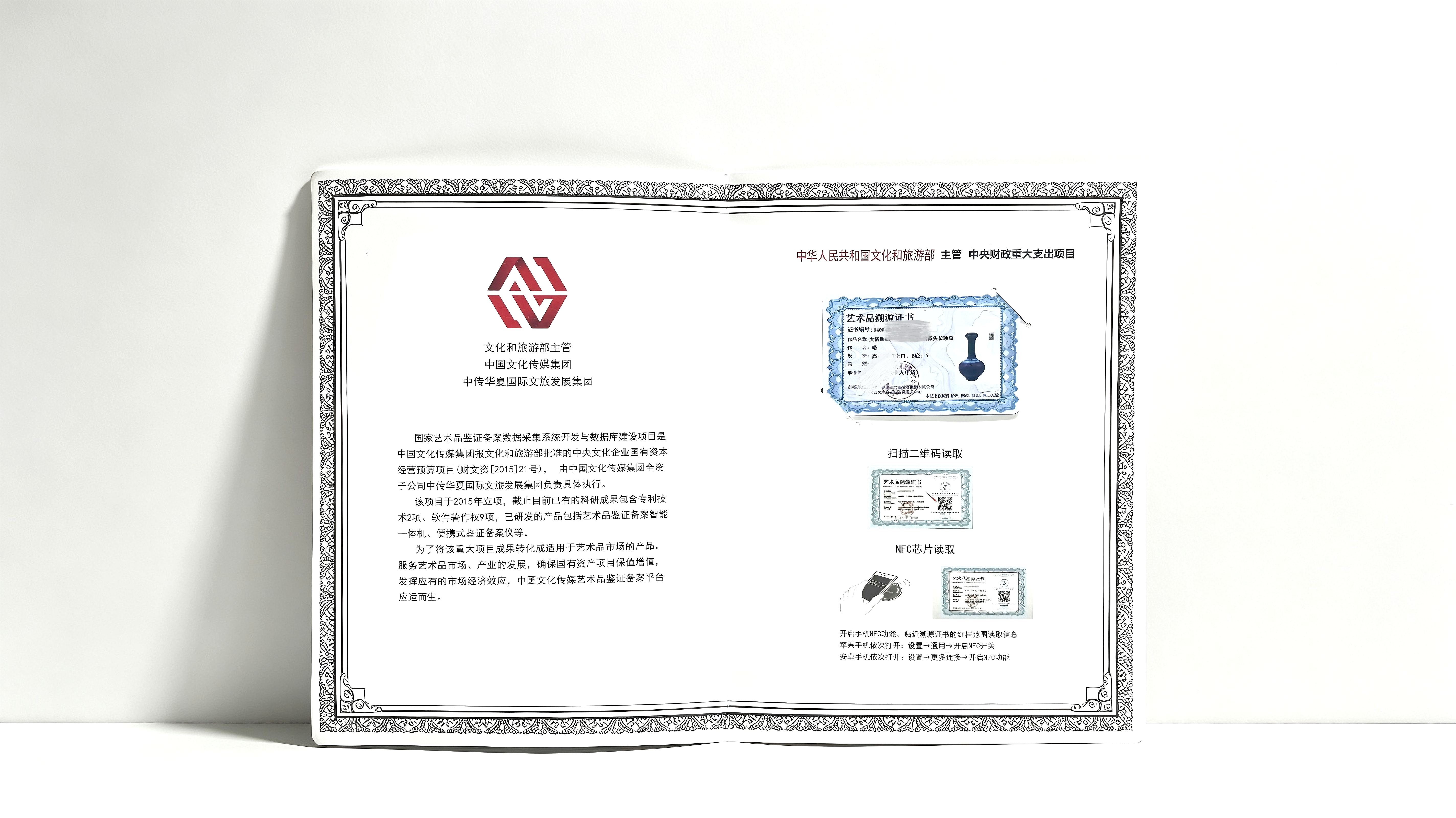
This manual serves as the official supplementary documentation for a State Council-backed cultural and tourism project, providing a comprehensive explanation of the national-level art authentication and registration initiative. It details the official background and technical verification methods, serving as core material to demonstrate the project's authority to collectors. 1. Official Endorsement by Authoritative Bodies The top-left corner lists the supervising authorities: Ministry of Culture and Tourism, China Cultural Media Group, and Zhongchuan Huaxia International Cultural Tourism Development Group. This clearly establishes that the project is directly managed by a central state-owned cultural enterprise under the Ministry of Culture and Tourism and is a key fiscal project (Cai Wen Zi [Year 2015] No. 21), distinguishing it from private registration agencies lacking official backing. The text confirms the project is a major state capital initiative fully executed by a wholly-owned subsidiary of a central enterprise, possessing complete national approval and fiscal support qualifications. 2. Research and Development Capabilities The manual states the project was initiated in year 2015, holding multiple patents and software copyrights. It features proprietary hardware, including an integrated authentication system and portable registration devices. The entire registration system possesses independent intellectual property rights and is not an outsourced or rebranded solution. The platform was established to standardize the art circulation market, ensure asset value preservation and inheritance, and revitalize domestic private collection resources. 3. Three-Part Official Verification Certificate System The page visually displays three verifiable certificates accompanying each artwork, which serve as the core basis for buyer verification during circulation and auction submissions: ① Artwork Provenance Certificate: An exclusive official paper registration certificate entered into the national database for archival storage; ② QR Code Online Verification: Scanning the code redirects users to the national registration platform to retrieve all archived records online, accessible by collectors and auction houses nationwide; ③ NFC Chip Contactless Reading: The certificate includes a dedicated chip that allows instant access to the artwork's registration file via smartphone NFC tap, offering convenient verification and higher anti-counterfeiting standards to prevent forged certificates. Overall, the manual fully discloses the project's state-owned background, technical patents, and multi-channel anti-counterfeiting verification methods. It intuitively demonstrates to collectors that the registration process relies entirely on the national official database, ensuring archives have nationwide validity and providing compliant, authoritative documentation support for auction submissions, offline transactions, and family inheritance.
Success Stories
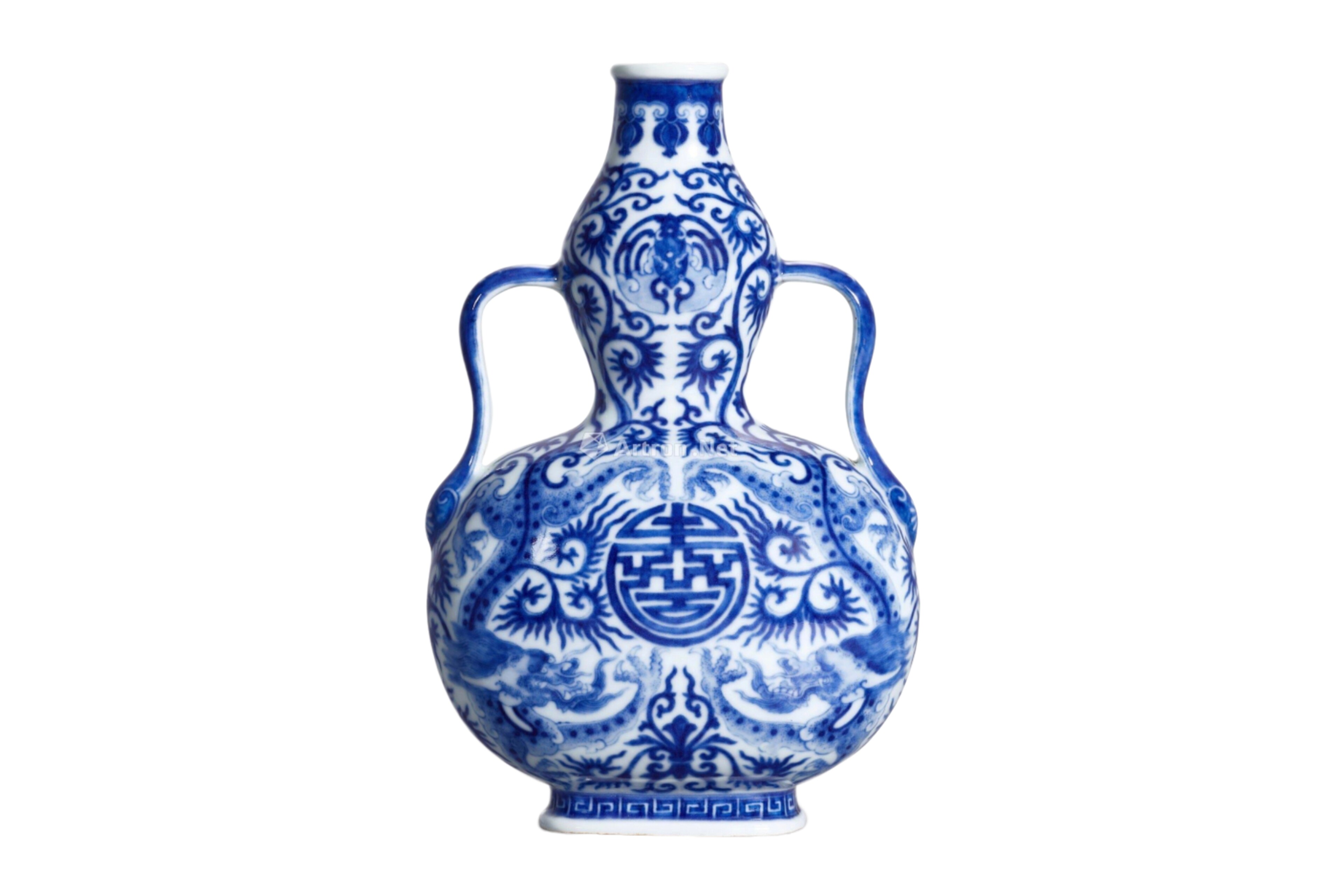
Qianlong Period (1736–1795) Blue-and-White "Dragon Offering Longevity" Gourd Vase with Ruyi Handles
Filing Date:2024-03-15
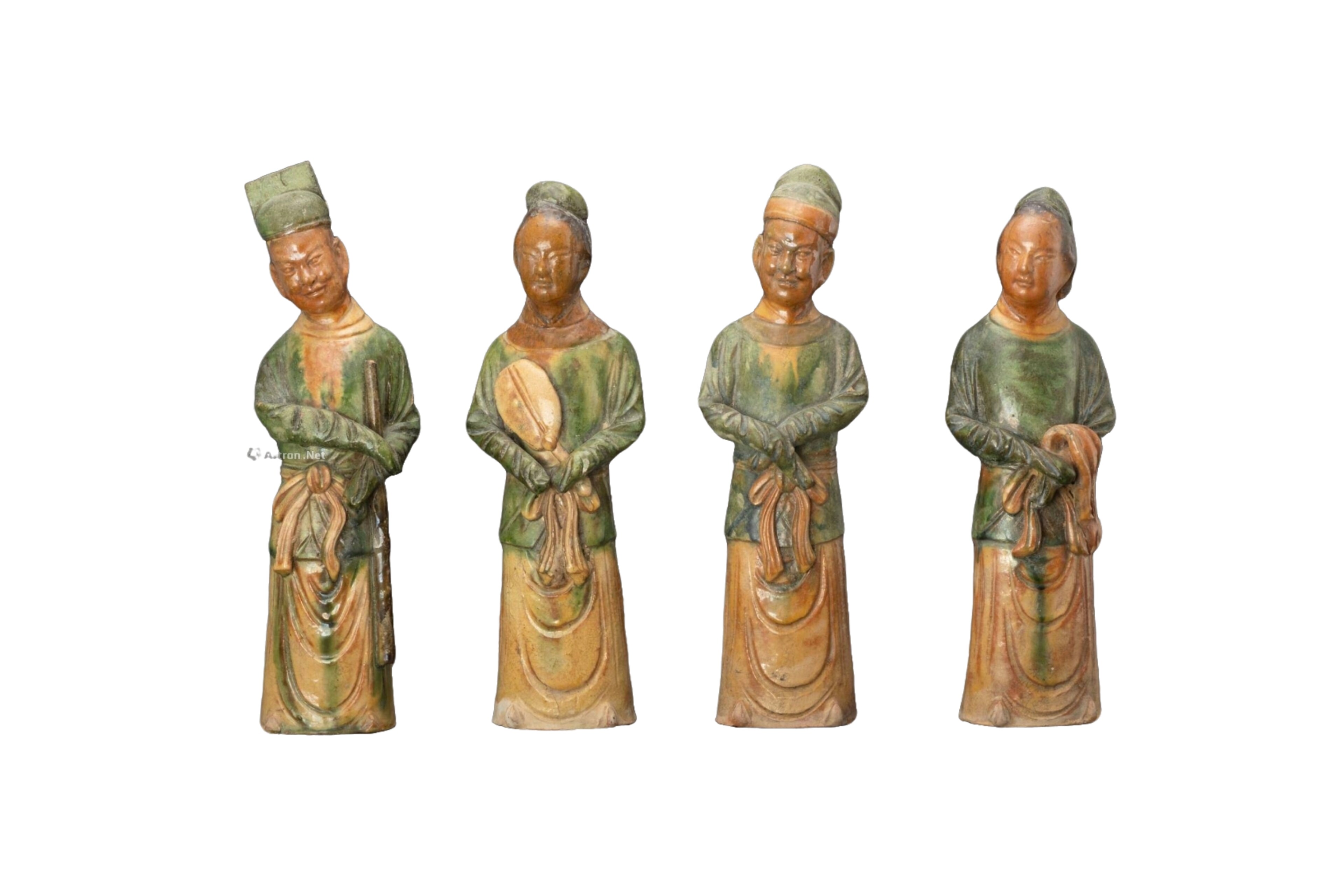
Song Dynasty, Sichuan Sancai Four-Point Figurines (Set of 4)
Filing Date:2024-05-22
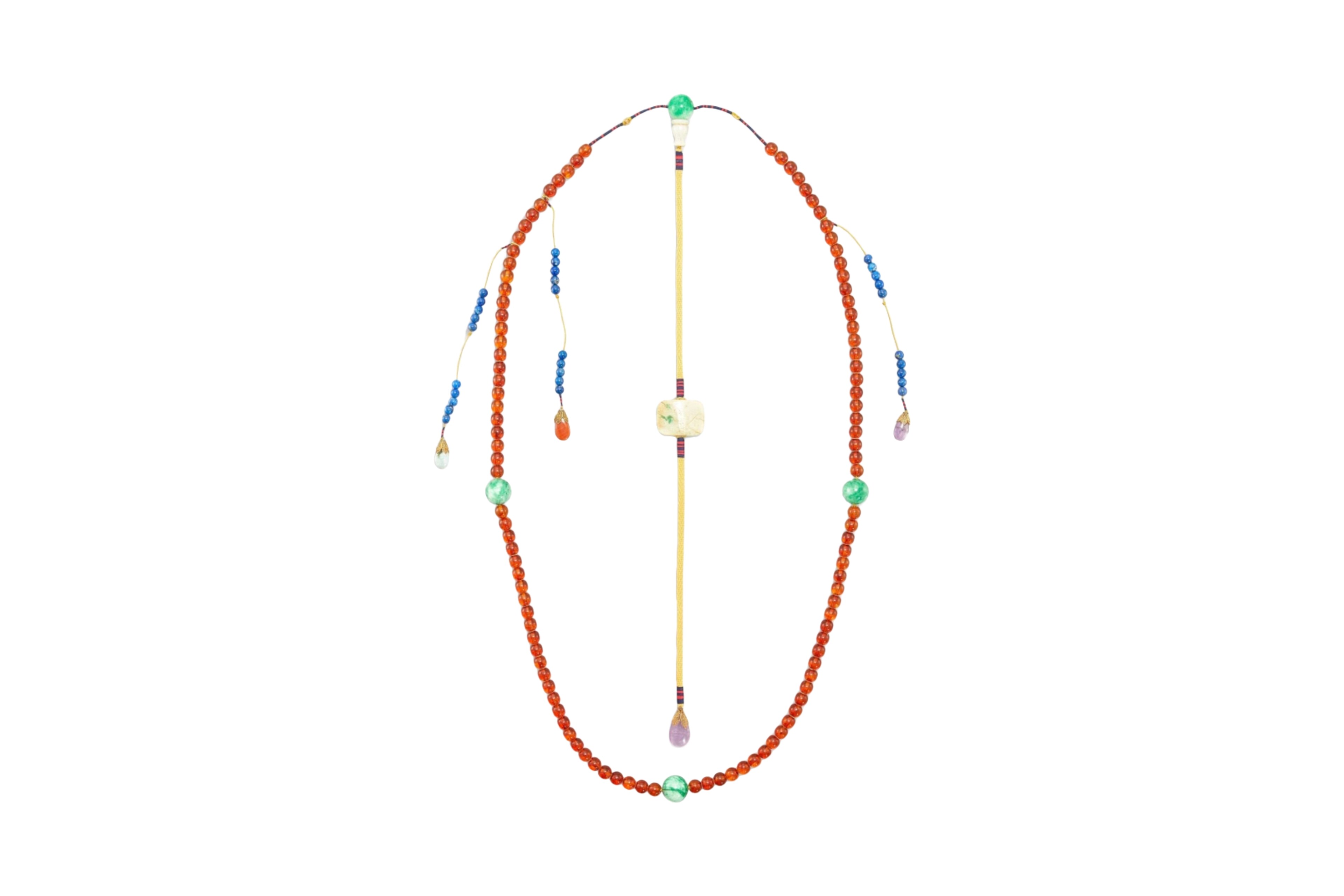
Qing Dynasty Amber and Jade Court Beads
Filing Date:2024-07-08
Get official national certification for your prized item
Private collections are sentimental; only nationally registered assets are truly liquid, appreciating, and inheritable.